


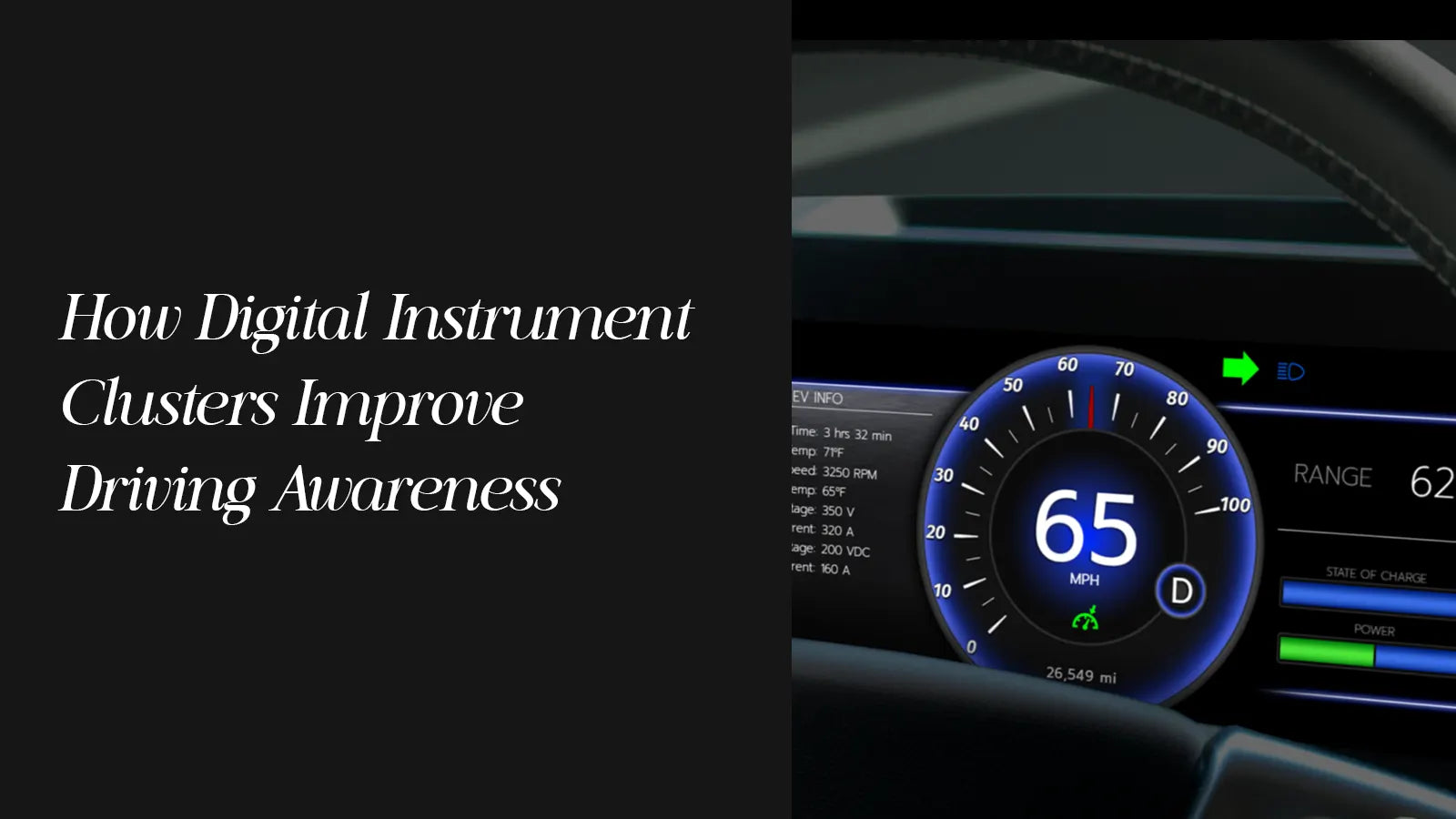
Modern vehicles are becoming smarter, more connected, and more focused on driver convenience than ever before. As automotive technology continues to evolve, traditional analogue dashboards are gradually being replaced by advanced digital instrument clusters that offer a more interactive and informative driving experience.
A digital instrument cluster is no longer just a premium feature found in luxury vehicles. It has become an important upgrade for drivers who want better visibility, improved control, and enhanced driving awareness on the road. From real time vehicle data to navigation support and safety alerts, digital displays help drivers stay informed without unnecessary distractions.
As road conditions, traffic density, and driving demands continue to increase, having immediate access to accurate information plays a crucial role in safer and more confident driving.
What Is a Digital Instrument Cluster?
A digital instrument cluster is an electronic display system that replaces traditional mechanical gauges behind the steering wheel. Instead of standard speedometers and fuel dials, drivers get a fully digital screen that presents vehicle information in a clear and customisable format.
These displays often include speed, RPM, fuel levels, navigation directions, tyre pressure monitoring, warning alerts, driving modes, and other important vehicle updates. Advanced systems may also integrate multimedia controls, smartphone connectivity, and real time driving assistance features.
The main purpose of a digital instrument cluster is to make information easier to read and more accessible while driving.
Improved Visibility for Drivers
One of the biggest advantages of digital instrument clusters is improved visibility. Traditional dashboards can sometimes be difficult to read in poor lighting conditions or while driving at night. Digital displays offer sharper graphics, brighter illumination, and adjustable layouts that improve readability in different environments.
Many modern clusters also allow drivers to customise screen brightness and display preferences according to their comfort. This helps reduce eye strain and ensures essential information remains clearly visible at all times.
A well organised digital dashboard allows drivers to focus on the road while quickly accessing important driving data.
Real Time Information Enhances Awareness
Driving awareness depends heavily on how quickly and accurately a driver can process information. Digital instrument clusters improve this by displaying real time vehicle data instantly.
Drivers can monitor speed, fuel consumption, engine performance, tyre pressure, and warning indicators more efficiently without searching across multiple gauges. Immediate access to this information allows quicker responses to changing driving conditions.
For example, if tyre pressure drops unexpectedly or engine temperature rises, the system can alert the driver immediately, helping prevent larger mechanical issues or safety risks.
Better Navigation Support
Many digital instrument clusters now integrate navigation systems directly into the driver’s display. Instead of constantly looking at the centre infotainment screen or smartphone, drivers can view navigation directions directly in their line of sight.
This reduces distraction and allows drivers to stay focused on the road while following routes more comfortably. Clear turn by turn directions displayed behind the steering wheel improve driving confidence, especially during long journeys or unfamiliar routes.
This integration creates a smoother and safer driving experience overall.
Reduced Driver Distraction
Traditional driving often requires shifting attention between the road, dashboard, infotainment system, and navigation devices. Digital instrument clusters help minimise these distractions by centralising important information into one organised display.
Many modern systems use simplified graphics and intuitive layouts that help drivers absorb information quickly. Important alerts are prioritised visually so that drivers can react faster without becoming overwhelmed.
Some advanced clusters also support voice control and steering mounted controls, reducing the need for manual interaction while driving.
Customisable Driving Experience
Another reason digital instrument clusters are becoming increasingly popular is their customisation options. Drivers can often personalise the display according to their preferences and driving habits.
Some may prioritise navigation and speed information, while others may prefer performance data, media controls, or fuel efficiency tracking. Different driving modes such as Eco, Sport, or Comfort can also change the display layout automatically to suit driving conditions.
This personalised experience makes driving more engaging while improving overall convenience and usability.
Enhanced Safety Features
Modern digital instrument clusters are closely connected with advanced driver assistance systems. They can display important safety alerts such as lane departure warnings, blind spot monitoring, collision alerts, and parking assistance information in real time.
Having these warnings directly in front of the driver improves reaction time and increases overall situational awareness. Instead of relying solely on sounds or dashboard warning lights, drivers receive clearer visual guidance during critical situations.
As automotive safety technology continues to improve, digital displays are becoming central to creating smarter and safer vehicles.
A More Premium Driving Feel
Digital instrument clusters also enhance the visual appeal of a vehicle’s interior. The sleek and modern appearance creates a more refined driving environment while adding a premium touch to the dashboard.
Many car enthusiasts appreciate the futuristic styling and interactive interface that digital displays provide. Smooth animations, high resolution graphics, and dynamic layouts contribute to a more advanced and enjoyable driving experience.
This combination of technology and aesthetics has made digital clusters one of the most sought after vehicle upgrades in modern automotive customisation.
Supports Smarter Vehicle Monitoring
Modern vehicles generate large amounts of data during operation. Digital instrument clusters simplify how this information is presented to drivers.
Instead of relying on basic warning lights alone, drivers receive more detailed insights into vehicle performance and maintenance needs. This helps improve vehicle care and encourages proactive maintenance habits.
Features such as service reminders, fuel economy tracking, battery monitoring, and driving statistics help drivers better understand their vehicle’s condition over time.
The Future of Connected Driving
As automotive technology advances further, digital instrument clusters will continue evolving with smarter connectivity and more intelligent driving support systems. Future developments may include augmented reality displays, AI based driving assistance, and deeper integration with connected vehicle ecosystems.
Drivers today are increasingly looking for vehicles that combine technology, convenience, and safety in one seamless experience. Digital instrument clusters represent an important step towards that future by improving how drivers interact with their vehicles every day.
Also, Read Why Modern Cars Need Advanced Parking Sensor Systems
Conclusion
Digital instrument clusters have transformed the driving experience by making vehicle information clearer, more accessible, and easier to understand in real time. From improving visibility and reducing distractions to enhancing navigation and safety awareness, these advanced systems play a major role in supporting smarter and safer driving.
As modern vehicles continue adopting connected technologies, digital instrument clusters are becoming essential for drivers who value convenience, control, and modern automotive innovation. Autostyle UK reflects this shift towards intelligent vehicle upgrades by offering advanced automotive solutions designed to enhance both driving performance and everyday comfort.


